LEGO Minifigures Explained (and Why the Box Highlights Them)

Pick up a LEGO box and the minifigures are hard to miss. On kids' sets they're all over the front, right in the thick of the scene, and often lined up again on top in action poses. Adult sets play it cooler: the cast stands in a calm row along the top or side of the box, like actors taking a curtain call.
LEGO minifigures are the little people – the figures that populate the sets. If you're buying a gift, that parade can feel like a code everyone else already knows. Here's what the figures are, why the box gives them so much real estate, and what the headcount actually tells you about who a set is for. Less than you'd think, as it happens.
What a LEGO Minifigure Actually Is
The minifigure is the standard LEGO person: four bricks tall, yellow-headed unless it's playing a specific movie character, and wearing the same gentle smile the company settled on decades ago.
That version – the one you'd recognize instantly – arrived in 1978, designed by Jens Nygaard Knudsen. Earlier attempts existed, but they were strange little things: solid bodies, no faces, arms that didn't move. The 1978 redesign added movable arms and legs and a printed face, and it first showed up as police officers, knights, and astronauts across the company's town, castle, and space lines.
Here's the remarkable part: the design has barely changed since. A figure from a brand-new set stands the same height and snaps onto the same studs as one from 1985, which is why loose figures survive decades of couch cushions and hand-me-down bins and still work.
Three Pieces, Seven Points of Movement
Out of the bag, a minifigure is three chunks: a head, a torso with the arms already attached, and a pair of legs on a shared hip piece. They press together in seconds and pull apart just as easily – which is also why stray heads turn up in vacuum cleaners.
The movement is simple but surprisingly expressive. The head spins all the way around. Arms swing at the shoulders, hands rotate at the wrists, and each leg swings at the hip, so a figure can sit, march, wave, or slump. Seven points of movement in total. No elbows, no knees – the figure does not do yoga.
Those hands are the quiet genius of the design. Each one is a small C-shaped clip sized to grip every accessory the company has made since the seventies: swords, coffee mugs, wands, umbrellas, croissants. The stud on top of the head takes hair, hats, and helmets, and the feet clip onto studs anywhere in a build, so a figure can stand on a castle wall or a spaceship wing without falling over.
Microfigures, Babies, and One Lookalike
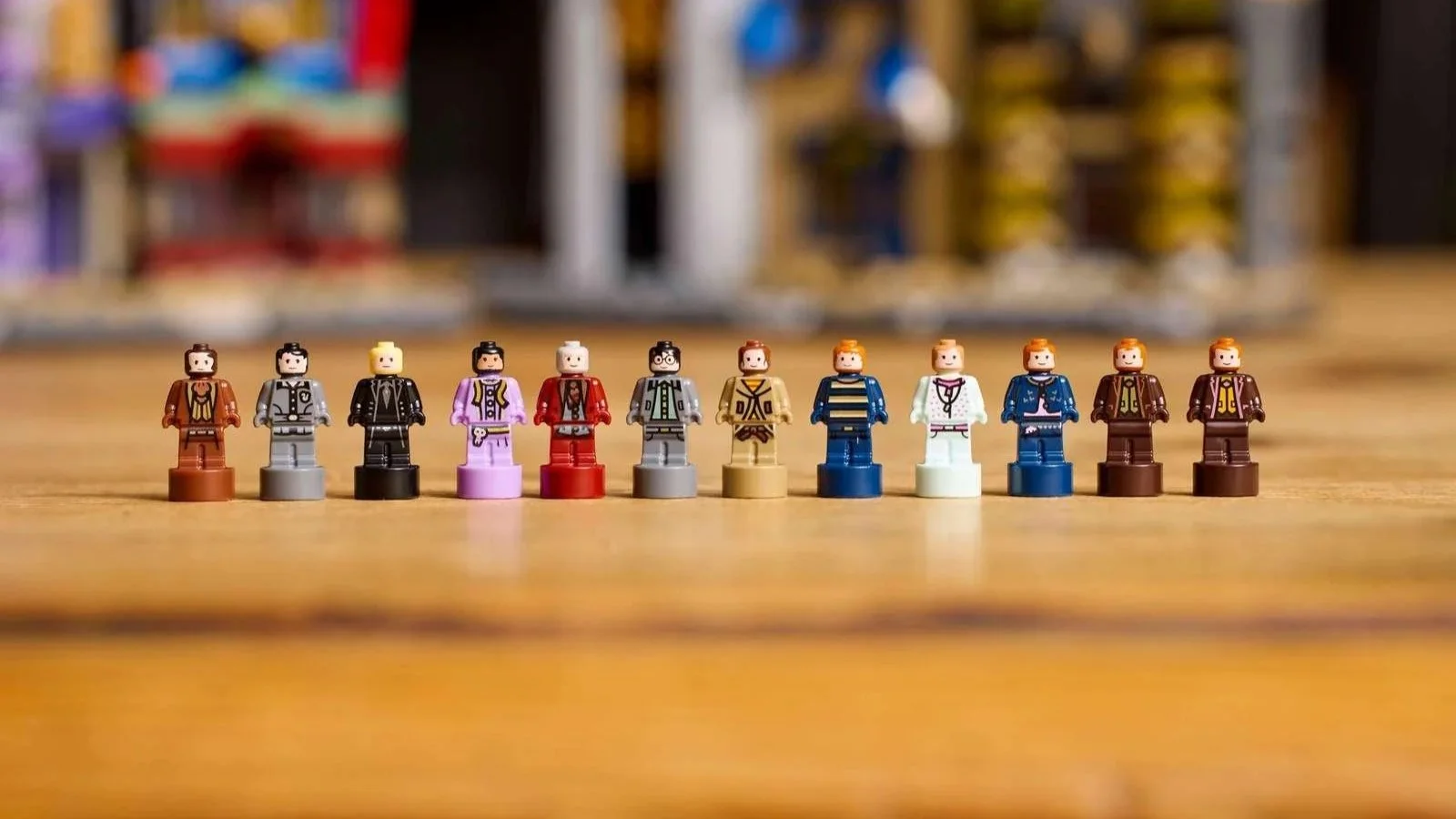
Some sets shrink the people along with everything else. A microfigure is a single solid piece, roughly half the height of a minifigure, with the character printed on the front and nothing that moves. They exist for microscale models – builds where an entire castle fits on a side table, so a full-size figure would loom over the gates like Godzilla. The six-thousand-piece Hogwarts Castle is the famous example: it includes just four full-size minifigures but 27 microfigures to fill the halls, and the Diagon Alley Wizarding Shops model pulls the same street-scene trick with twelve.
Babies are the opposite indulgence. Since 2016 the company has made a tiny one-piece baby body, and its most famous user is Grogu – Baby Yoda to everyone outside the fandom – who pairs that body with an oversized-eared head and perches on a single stud. In product listings he counts toward the minifigure tally like everyone else.
One lookalike is not a minifigure at all. The taller, slimmer, more realistically proportioned figures in LEGO Friends and Disney Princess sets are called mini-dolls. They grip the same accessories but belong firmly to the kids' lines – you won't find a mini-doll in a set aimed at adults.
Why Adult Sets Brag About Their LEGO Minifigures
Now the marketing logic. Nearly every adult-oriented set that includes figures is a franchise set – Star Wars, Marvel, Harry Potter, The Lord of the Rings – and in those worlds the figures aren't generic townsfolk. They're characters. The LEGO Group leans into this hard, seeding its big franchise sets with exclusive figures of the most wanted characters, versions you cannot get anywhere else. The building is the project; the exclusive cast is the trophy case.
It's a deliberate sweetener, and it keeps working long after purchase. Exclusive characters are usually what carries a set's value on the secondhand market years later – in some sets the figures alone account for around half of what the whole thing trades for, and dedicated hobbyists sometimes buy a set mainly for the people inside it.
None of that should turn gift shopping into an investment decision. Buy a set because the person loves the characters standing on it. But it does explain why a whole panel of the box is handed over to a row of tiny plastic people.
What the Minifigure Count Tells You (and What It Doesn't)
The natural assumption is that a big cast means a kids' toy. The numbers say otherwise. Minifigure counts swing wildly in every direction, and some of the most adult-targeted models in the catalog carry the biggest crowds. The record holder is the enormous Death Star, an 18+ set with 38 figures. Avengers Tower packs 31, the Daily Bugle newspaper building carries 25, and Rivendell from The Lord of the Rings seats 15 around its council table. Every one of those is marketed squarely at grown-ups.
Meanwhile, sets designed purely for display – the flower collections, the architecture models – often include no figures at all, and nobody misses them. So the count is a clue about what kind of set you're holding: a scene meant to be populated, or an object meant to be admired. It says almost nothing about age.
Price is where the count does show up. Figures in adult sets are noticeably fancier than their kids'-range cousins – printed arms, printed legs, printed backs, a second facial expression hiding under the hair – and a cast of 25 or 38 characters is a real slice of what you're paying for. A set can look expensive for its size when part of the money is buying a crowd.
One Number Down, Several to Go
The minifigure lineup takes up one panel of the box, and the rest reads just as easily once you know the code. Decoding the Box: How to Read a LEGO Set Like a Pro walks the whole panel, front to back.
Two numbers deserve their own stops: What a LEGO Set Number Means (and When You Need It) covers the digits that matter at checkout, and How LEGO Piece Count Affects Difficulty, Time, and Size turns the biggest number into hours and shelf space. Noticed the figures keep appearing in black boxes? Why 18+ and Black-Box LEGO Sets Make Great Adult Gifts explains why that's a good sign.